

In Australia’s competitive business landscape, employee wellbeing is no longer just a ‘nice-to-have’ perk; it’s a critical driver of productivity, retention, and long-term success. While many organisations recognise this, their well-intentioned efforts often begin and end with a fruit bowl in the breakroom. To foster a genuinely healthy and engaged workforce, businesses need to think bigger and implement more strategic initiatives.
This guide moves beyond the basics, offering a comprehensive roundup of 10 impactful and actionable workplace wellness programs ideas specifically tailored for Australian small to medium-sized enterprises (SMEs). We’ll cut through the generic advice to provide practical, step-by-step implementation plans for each concept, ensuring you can find the right fit for your unique culture, budget, and team needs.
Throughout this listicle, you will discover how to:
- Implement diverse programs covering mental health, physical activity, financial literacy, and more.
- Measure the success of your initiatives with clear, relevant metrics.
- Integrate targeted services, like onsite corporate massage from specialists such as Swift Results Massage Therapy, to amplify the benefits and deliver tangible results.
Whether your team is based in a bustling Melbourne high-rise or a regional Queensland office, this article provides the tools you need to build a resilient, motivated, and thriving workplace. Let’s explore how to create a wellness program that truly makes a difference.
1. Holistic Mental Health & Stress Management Programs
A holistic mental health program is a comprehensive initiative that moves beyond a basic Employee Assistance Program (EAP) to proactively support psychological wellbeing. It treats mental health with the same priority as physical health, aiming to prevent issues like burnout and anxiety before they escalate. This involves a multi-faceted approach, combining resources, training, and a supportive organisational culture to tackle work-related stress head-on.
What It Involves
This approach integrates several key components. It includes providing access to confidential counselling services, offering workshops on topics like stress management and resilience, and making mindfulness resources such as meditation apps readily available. A crucial element is training managers to recognise signs of mental distress and foster a psychologically safe environment where employees feel comfortable discussing their challenges.
Actionable Insight & Implementation Steps
- Assess Needs: Use an anonymous survey tool (like SurveyMonkey or Google Forms) to ask specific questions about workplace stressors. Actionable questions could include: “On a scale of 1-10, how manageable is your current workload?” and “What specific support (e.g., workshops, EAP info, flexible hours) would most help you manage stress?”
- Partner with Experts: Engage with Australian organisations like Beyond Blue or The Black Dog Institute. These groups offer evidence-based resources, workplace training modules, and fundraising opportunities that can build team engagement.
- Launch & Promote: Kick off the program with a clear communication plan. Schedule regular workshops and “mindfulness moments” into team calendars to maintain momentum and normalise participation.
- Train Leadership: Equip managers with Mental Health First Aid training. This provides a structured framework for identifying, approaching, and supporting a person experiencing a mental health problem.
Measuring Success
- Cost & Time: Initial setup can range from low (subsidising apps) to moderate (hiring workshop facilitators). Time investment includes 2-4 hours per month for coordination and promotion.
- Metrics to Track: Monitor EAP usage rates, track absenteeism and staff turnover data, and use pulse surveys to gauge changes in perceived stress levels and psychological safety.
Key Insight: A successful program isn’t just about providing resources; it’s about building a culture where seeking help is normalised and managers are equipped to offer genuine support.
How Corporate Massage Complements This Program
Integrating corporate massage from a provider like Swift Results Massage Therapy directly supports a holistic mental health strategy. Regular onsite massage is a tangible way to combat stress, a primary contributor to poor mental health. It provides a physical release for mental tension, reduces stress hormones like cortisol, and offers employees a dedicated moment to disconnect and recharge. This demonstrates a clear investment in their immediate wellbeing, reinforcing the company’s commitment to creating a low-stress, supportive workplace.
2. Fitness and Physical Activity Programs
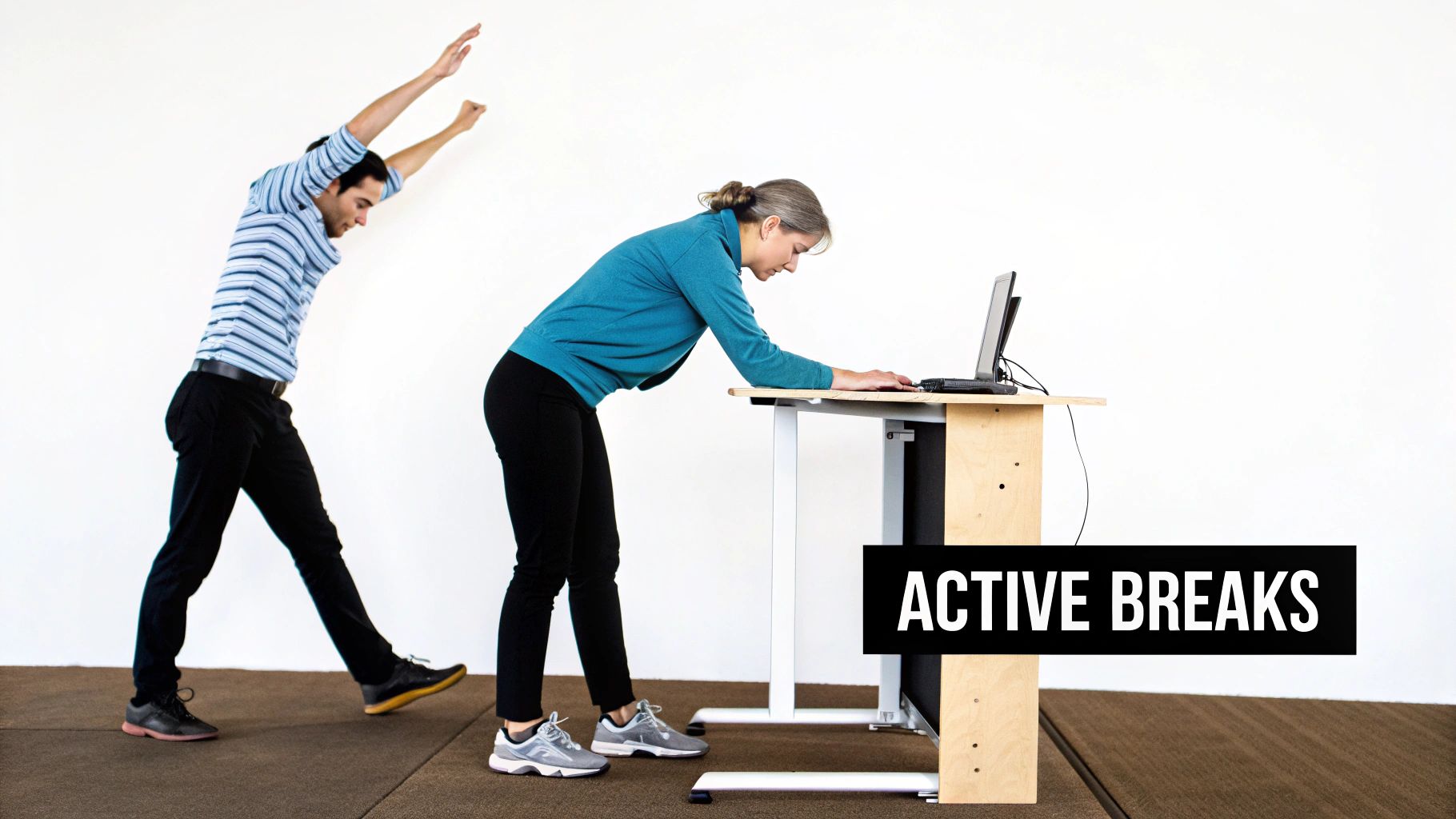
A fitness and physical activity program is a proactive initiative designed to counteract the negative health effects of a sedentary work environment. It encourages employees to move more and build healthy habits through a variety of engaging activities. This type of program goes beyond simple health advice by providing tangible opportunities and resources, such as subsidised gym memberships, on-site fitness classes, or organised team sports, making physical wellbeing an accessible part of the workday.
What It Involves
This involves creating a structured framework to support employee movement. Common components include negotiating corporate discounts with local gyms, organising weekly yoga or HIIT classes in an office space, or launching company-wide fitness challenges using wearable technology. Other popular ideas include establishing running or walking groups, setting up a company sports team for a local league, or even providing access to online fitness platforms that offer a wide variety of on-demand workouts suitable for all levels. https://www.youtube.com/embed/E3yffxfUGZk
Actionable Insight & Implementation Steps
- Survey Interests: Ask employees what kind of physical activities they enjoy. Use a simple poll: “Which would you most likely join: A) Lunchtime walking group, B) After-work yoga class, C) Social sports team (e.g., netball), D) Subsidised gym membership?” This ensures the program has immediate appeal.
- Explore Local Partnerships: Contact nearby Australian fitness chains (like F45 or Anytime Fitness) or local yoga studios to inquire about corporate rates or on-site class options. Frame it as a benefit for them to access a new client base.
- Start Small with a Challenge: Launch a simple, inclusive challenge like a company-wide “steps challenge” using an app like Stridekick to build momentum and gauge participation. Offer a small prize, like a gift voucher to a local café.
- Schedule & Communicate: Set up a regular schedule for activities (e.g., “Wellness Wednesdays”) and promote it actively through internal channels like Slack or Teams.
Measuring Success
- Cost & Time: Can range from low (organising a free walking club) to high (on-site gym facilities). Time commitment is typically 3-5 hours per month for coordination and promotion.
- Metrics to Track: Monitor participation rates in programs and classes, track sick leave data for potential reductions, and use surveys to measure changes in employee energy levels and reported physical health.
Key Insight: The most effective physical activity programs offer variety and inclusivity, ensuring there are appealing options for every fitness level, from gentle yoga to competitive team sports.
How Corporate Massage Complements This Program
Corporate massage from a provider like Swift Results Massage Therapy is a perfect complement to any fitness initiative. It directly addresses the physical demands of increased activity by aiding in muscle recovery, preventing strain-related injuries, and improving flexibility. For employees starting a new fitness routine, remedial massage can alleviate delayed onset muscle soreness (DOMS) and keep them motivated. It acts as a restorative tool that helps staff maintain their physical activity goals, reinforcing the company’s holistic commitment to their health and preventing burnout or injury.
3. Nutrition and Healthy Eating Initiatives
A nutrition and healthy eating initiative is designed to educate and empower employees to make healthier food choices, both at work and at home. This goes beyond simply stocking the kitchen with fruit; it’s a comprehensive approach that can include subsidised healthy meals, educational workshops, and access to nutritional experts. The goal is to improve energy levels, reduce health risks, and enhance cognitive function by fuelling the body and mind effectively.

What It Involves
This type of program involves making healthy options the most convenient and appealing choices in the workplace. This could mean overhauling vending machine selections, partnering with a healthy catering service for lunches, or organising workshops with accredited dietitians. Other components include offering cooking demonstrations, providing clear nutritional labelling on all food options, and creating fun challenges that encourage staff to track their fruit and vegetable intake.
Actionable Insight & Implementation Steps
- Survey & Assess: Ask employees what they’d like to see. Do they want healthier snacks, more plant-based meal options, or educational lunch-and-learns? Frame the question positively: “What healthy food option would make your workday better?”
- Start Small: Action this by introducing a “healthy snack station” with fruit, nuts, and yoghurt. Remove or reduce sugary drinks and highly processed snacks. Partner with a local fruit delivery service for freshness.
- Engage an Expert: Partner with a local nutritionist or an organisation like Nutrition Australia to run a practical workshop on a topic like “Healthy Lunches for Busy People” or provide credible, evidence-based resources.
- Promote & Educate: Clearly communicate the changes and the reasons behind them. Use posters, emails, and team meetings to share tips for healthy eating and highlight the new options available.
Measuring Success
- Cost & Time: Low cost for simple changes like improving snack quality. Moderate cost for subsidised meals or hiring nutritionists. Time investment is minimal, around 1-2 hours per month for coordination.
- Metrics to Track: Monitor the uptake of healthy options, gather feedback through surveys on energy levels and satisfaction, and potentially track changes in sick leave days over the long term.
Key Insight: The key to a successful nutrition program is convenience and education. Making the healthy choice the easy choice removes barriers and empowers employees to build better habits.
How Corporate Massage Complements This Program
Integrating corporate massage from a provider like Swift Results Massage Therapy amplifies the benefits of a nutrition program. Good nutrition helps fuel the body for physical repair and energy, while remedial massage directly addresses the physical strain and muscular tension that can accumulate from poor posture or stress. When an employee is eating well, their body is better primed to benefit from the restorative effects of massage. This combination creates a powerful, holistic approach to physical wellbeing, tackling health from both the inside (nutrition) and the outside (musculoskeletal care).
4. Flexible Work and Work-Life Balance Programs
A flexible work program moves beyond the traditional 9-to-5, office-centric model to give employees greater control over when, where, and how they work. It encompasses policies like remote or hybrid work, flexible start and finish times, compressed workweeks (e.g., a 4-day week), and generous leave policies. The core objective is to empower staff to better integrate their professional duties with personal responsibilities, reducing commute stress and preventing burnout.
What It Involves
This involves establishing clear policies that support various work arrangements. It could mean providing stipends for home office setups, implementing robust project management tools like Asana or Trello to facilitate asynchronous collaboration, and setting clear communication expectations. The focus is on output and results rather than hours clocked, a model championed by Australian tech giant Atlassian with its “Team Anywhere” approach.
Actionable Insight & Implementation Steps
- Survey Your Team: Ask employees what kind of flexibility would be most beneficial to them. Actionable options could be: “A) Flexible start/finish times, B) A compressed 4-day work week, C) More formal work-from-home days.”
- Develop Clear Policies: Create a formal flexible work policy that outlines eligibility, communication protocols (e.g., core hours for meetings), and expectations for availability to ensure fairness and clarity.
- Invest in Technology: Equip your team with the necessary tools for remote collaboration, including reliable communication software (like Slack or Teams) and secure access to company networks.
- Trial and Refine: Start with a pilot program for a specific team or department. Gather feedback after one month on what’s working and what isn’t, then make adjustments before a company-wide rollout.
Measuring Success
- Cost & Time: Initial costs may include technology upgrades or home office stipends. Time investment is focused on policy development (10-20 hours) and ongoing management check-ins.
- Metrics to Track: Monitor employee retention and turnover rates, track productivity metrics (if applicable to the roles), and use engagement surveys to measure satisfaction with work-life balance.
Key Insight: True flexibility is built on trust. It requires a cultural shift from measuring presence to valuing performance, empowering employees to deliver their best work in a way that suits their lives.
How Corporate Massage Complements This Program
Flexible work arrangements can blur the lines between home and office, sometimes leading to poor ergonomic setups and increased musculoskeletal strain. Onsite massage from a provider like Swift Results Massage Therapy is an excellent way to support hybrid and office-based staff. Scheduling a dedicated “in-office” massage day encourages team connection and provides a powerful incentive for staff to come together. It directly addresses the physical discomforts of non-traditional workspaces, such as neck and back pain, reinforcing the company’s holistic commitment to employee wellbeing.
5. Health Screening and Preventive Care Programs
A health screening and preventive care program is a proactive workplace wellness initiative designed to identify potential health risks before they become serious issues. It moves beyond reactive healthcare by providing employees with convenient access to health assessments, screenings, vaccinations, and educational resources. The core goal is to empower staff to take control of their health, leading to a healthier, more productive workforce and reduced long-term healthcare costs.
What It Involves
This type of program typically includes onsite health checks for key indicators like blood pressure, cholesterol, and blood glucose levels. It can also encompass seasonal flu vaccinations, skin cancer checks, or digital health risk assessments. A crucial component is providing confidential consultations with health professionals to help employees understand their results and create personalised action plans for improvement.
Actionable Insight & Implementation Steps
- Select a Provider: Partner with a reputable Australian corporate health provider, such as Bupa or Australian Corporate Health, to deliver onsite services. Request a proposal outlining their packages and privacy policies.
- Plan the Logistics: Schedule the screenings at a time that minimises work disruption. Book a private meeting room for consultations and create a simple online sign-up sheet to manage appointments.
- Promote and Reassure: Communicate the program’s benefits clearly, emphasising that all individual results are confidential and protected by Australian privacy laws. Frame it as a convenient and free benefit.
- Offer Follow-up: Provide resources for follow-up actions, such as access to health coaching, nutrition workshops, or referrals to healthcare providers. Aggregate, anonymised data can inform future wellness initiatives.
Measuring Success
- Cost & Time: Cost varies from low (for digital assessments) to high (for comprehensive onsite screenings). Time investment is primarily in initial setup and promotion, typically 4-6 hours.
- Metrics to Track: Monitor participation rates, aggregate (anonymised) data on common health risks identified, and track long-term changes in absenteeism and health insurance claims.
Key Insight: The value of health screenings is not just in the data collected, but in sparking a conversation about health and motivating individuals to take preventive action.
How Corporate Massage Complements This Program
Integrating corporate massage from a provider like Swift Results Massage Therapy is an excellent way to support a preventive care strategy. After a health screening identifies stress or musculoskeletal strain as a risk factor, regular onsite massage becomes a direct, tangible intervention. It provides immediate relief from physical tension caused by sedentary work, which can contribute to high blood pressure and chronic pain. By offering massage, a company demonstrates its commitment to addressing health risks with practical, ongoing support that helps employees feel better instantly.
6. Financial Wellness Programs
A financial wellness program is an employer-sponsored initiative designed to reduce employee financial stress by improving their financial literacy and security. It moves beyond simple retirement planning to address the full spectrum of personal finance challenges, from debt management and budgeting to saving for major life goals. By tackling the root causes of financial anxiety, these programs directly boost employee focus, morale, and overall wellbeing.
What It Involves
These programs typically offer a suite of resources, including confidential one-on-one coaching with certified financial planners, workshops on topics like building an emergency fund or understanding superannuation, and access to online tools for budgeting and debt management. A key component is tailoring education to different life stages, addressing the unique needs of recent graduates with student loans as well as employees nearing retirement. The goal is to create a non-judgemental, supportive environment where employees feel empowered to take control of their financial future.
Actionable Insight & Implementation Steps
- Gauge Interest: Use an anonymous survey to identify the biggest financial stressors your team faces. Ask: “Which topic would you find most valuable? A) Budgeting & saving tips, B) Understanding my super, C) Navigating the housing market, D) Managing debt.”
- Select a Partner: Engage with a reputable provider that offers qualified, independent financial advice. Australian organisations like Financial Counselling Australia can offer guidance, or you can partner with corporate financial wellness providers who are not tied to selling products.
- Launch with Workshops: Start with accessible, high-interest topics like “Budgeting Basics” or “Making the Most of Your Super” to generate engagement. Host them as lunch-and-learns with catering to boost attendance.
- Offer Confidential Coaching: Make one-on-one sessions available for employees who want personalised, private advice on their specific circumstances. Emphasise that these sessions are completely confidential.
Measuring Success
- Cost & Time: Costs can range from low (licensing online tools) to moderate-high (engaging professional financial coaches). Time commitment involves 3-5 hours per month for scheduling workshops and promoting resources.
- Metrics to Track: Monitor participation rates in workshops and coaching sessions, use pre- and post-program surveys to measure changes in financial confidence, and observe potential correlations with reduced absenteeism or improved employee retention.
Key Insight: Financial stress is a major contributor to poor mental health and presenteeism. Providing practical, unbiased financial education is a powerful way to show employees you care about their holistic wellbeing, both inside and outside of work.
How Corporate Massage Complements This Program
Financial stress often manifests physically as muscle tension, headaches, and poor sleep. Integrating corporate massage from Swift Results Massage Therapy provides a direct physical outlet for this stress. An onsite massage offers an immediate, tangible way to alleviate the physical symptoms of anxiety while employees work on the underlying financial causes. It acts as a powerful stress-reliever, helping to clear the mind and reduce cortisol levels, making it easier for employees to absorb and act on the information provided in the financial wellness program.
7. Social Connection and Community Building Programs
A social connection program focuses on fostering meaningful relationships and a strong sense of community among employees. It moves beyond superficial team-building exercises to create an environment where colleagues feel genuinely connected and supported. These initiatives aim to combat loneliness and isolation, which are significant detractors from overall wellbeing, by creating structured and informal opportunities for interaction.

What It Involves
This involves a mix of activities designed to appeal to a diverse workforce. Key components include organising social events (like team lunches or after-work gatherings), establishing Employee Resource Groups (ERGs) for shared interests or backgrounds, and facilitating mentorship programs. It also includes corporate social responsibility (CSR) initiatives, such as group volunteering days, which unite teams around a common purpose. The goal is to build a supportive ecosystem where everyone feels they belong.
Actionable Insight & Implementation Steps
- Gauge Interest: Use a simple poll to discover what resonates most with your team. Options: “A) Team lunch, B) Volunteering day, C) Office sports team, D) Special interest club (e.g., book club).”
- Start Small & Empower: Support employee-led initiatives. Provide a small budget ($100-$200) for a book club’s first books, a sports team’s registration, or a monthly morning tea. This fosters ownership.
- Plan a Company-Wide Event: Organise a low-pressure, inclusive event like a team volunteering day with an organisation such as Volunteering Australia or a casual family-friendly BBQ in a local park.
- Create Virtual Spaces: For remote or hybrid teams, set up dedicated non-work channels (e.g., #pets, #hobbies, #travel) on your communication platform to encourage informal chatter and connection.
Measuring Success
- Cost & Time: Can be very low-cost (employee-led clubs) to moderate (catered events or paid volunteering days). Time investment is typically 3-5 hours per month for coordination.
- Metrics to Track: Monitor participation rates in events and programs, use pulse surveys to measure feelings of belonging and connection, and track employee retention rates, as a strong community is a key driver of loyalty.
Key Insight: The most effective community-building programs are authentic and employee-driven. Empowering your team to create their own connections fosters a much stronger and more sustainable sense of belonging than top-down mandated fun.
How Corporate Massage Complements This Program
Integrating corporate massage from a provider like Swift Results Massage Therapy can act as a powerful catalyst for social connection. Setting up a massage station in a common area creates a positive, relaxed hub where employees naturally gather and interact before or after their session. It becomes a shared positive experience, sparking conversations and building rapport in a low-stress setting. This tangible wellness perk reinforces the company’s commitment to creating a caring, people-first culture, which is the foundation of any strong workplace community.
8. Sleep Hygiene and Rest Programs
A sleep hygiene and rest program is a proactive initiative designed to improve employee wellbeing by focusing on the critical role of sleep. It moves beyond simply managing fatigue by actively educating staff and creating a work environment that prioritises rest. It recognises that poor sleep is a major contributor to reduced productivity, poor mental health, and increased safety risks.
What It Involves
This type of program combines education, supportive policies, and physical resources. It typically involves workshops on the science of sleep, promoting good sleep habits, and providing resources like access to sleep-tracking apps or wearables. Forward-thinking companies may also introduce designated “nap pods” or quiet rooms for rest. A key cultural element is establishing clear boundaries around after-hours communication to protect employees’ downtime and allow for proper recuperation.
Actionable Insight & Implementation Steps
- Educate & Survey: Start by sharing resources from the Australian organisation, the Sleep Health Foundation, to build awareness. Survey staff anonymously: “Does work-related communication outside of hours affect your ability to switch off?”
- Establish Policies: Create and communicate a clear policy discouraging emails and work-related messages outside of standard hours. An actionable step is for leaders to use the “schedule send” feature for emails written after hours.
- Create a Rest Space: Designate a quiet, bookable meeting room as a “Wellbeing Room” for employees to rest or meditate briefly. Equip it with comfortable seating, dimmable lighting, and noise-cancelling headphones.
- Promote Resources: Subsidise subscriptions to sleep and meditation apps (like Calm or Headspace) or provide educational seminars on improving sleep quality from local experts.
Measuring Success
- Cost & Time: This can be a low-cost initiative (sharing free resources) to a moderate investment (creating a nap room). It requires a minimal time commitment of 1-2 hours per month for ongoing promotion and education.
- Metrics to Track: Monitor sick days and unplanned absenteeism, as sleep deprivation is linked to illness. Use pulse surveys to ask about energy levels and work-life balance. Track productivity metrics for any noticeable improvements.
Key Insight: Promoting sleep is not about encouraging laziness; it’s a strategic investment in cognitive function, emotional regulation, and overall performance.
How Corporate Massage Complements This Program
Integrating corporate massage from a provider like Swift Results Massage Therapy directly enhances a sleep hygiene program. Massage is proven to reduce stress and physical tension, both of which are common barriers to quality sleep. By lowering cortisol levels and alleviating muscle soreness, a workplace massage can help employees relax more deeply in the evening. This makes it easier to fall asleep and stay asleep, creating a powerful synergy between physical relaxation and restorative rest.
9. Substance Abuse Prevention and Recovery Programs
A substance abuse prevention and recovery program is a structured initiative designed to address drug and alcohol misuse within the workplace. Far more than a simple drug-testing policy, this program focuses on education, confidential support, and creating clear pathways to treatment. It acknowledges that substance dependency is a health issue, not a moral failing, and aims to protect both employee wellbeing and workplace safety through prevention and compassionate, non-punitive support.
What It Involves
This comprehensive approach involves establishing clear policies on substance use and providing educational resources about its risks. Key components include confidential access to support through an Employee Assistance Program (EAP), training for managers to recognise potential warning signs, and promoting a culture where employees can seek help without fear of immediate termination. It also outlines procedures for supporting an employee’s return to work after treatment, ensuring a smooth and supportive transition.
Actionable Insight & Implementation Steps
- Develop a Clear Policy: Create and communicate a formal substance abuse policy that outlines expectations, available support, and procedures, focusing on rehabilitation over punishment. Ensure it complies with Australian workplace law.
- Partner with Health Services: Engage with addiction specialists or Australian organisations like the Alcohol and Drug Foundation to access their evidence-based educational materials and expert guidance for workplaces.
- Train Leadership: Provide managers with training to help them identify signs of substance misuse, understand the company policy, and approach sensitive conversations with empathy and professionalism, focusing on performance and support.
- Promote Support Channels: Regularly communicate the availability of confidential support through your EAP, highlighting its specific role in helping with substance dependency issues. Use posters in break rooms and links in internal newsletters.
Measuring Success
- Cost & Time: Initial costs are moderate, primarily for policy development, expert consultation, and manager training. Ongoing time investment is around 2-3 hours per month for program promotion and management.
- Metrics to Track: Monitor EAP utilisation for substance-related issues, track incident reports related to safety, and note changes in absenteeism rates. Anonymous surveys can also gauge awareness and perceived support.
Key Insight: The most effective programs shift the focus from punishment to support, creating a safe environment where employees feel they can seek help for a health problem without jeopardising their career.
How Corporate Massage Complements This Program
Integrating regular onsite massage from a provider like Swift Results Massage Therapy offers a proactive, health-focused benefit that can act as a powerful preventative tool. Stress is a significant trigger for substance misuse. By offering a healthy coping mechanism like massage, employers provide a tangible way for staff to manage stress and anxiety. It promotes relaxation and physical wellbeing, reducing the reliance on negative coping strategies and contributing to a workplace culture that genuinely prioritises holistic health.
10. Ergonomics and Occupational Health Programs
An ergonomics and occupational health program is a proactive initiative designed to prevent work-related musculoskeletal injuries by optimising the work environment. It focuses on adapting workstations, tools, and tasks to fit the employee, rather than forcing the employee to adapt to a poorly designed workspace. This preventative approach aims to reduce physical strain, minimise the risk of chronic conditions like carpal tunnel syndrome, and boost overall physical wellbeing and productivity.
What It Involves
This involves more than just supplying an adjustable chair. A comprehensive program includes professional ergonomic assessments of individual workstations, providing high-quality equipment like sit-stand desks and supportive keyboards, and training staff on correct posture and body mechanics. It also encompasses promoting regular movement, stretching breaks, and establishing clear processes for reporting and addressing physical discomfort before it becomes a serious injury.
Actionable Insight & Implementation Steps
- Engage a Professional: Partner with an occupational therapist or ergonomist to conduct professional workstation assessments for all employees, both in-office and remote. This is a crucial step for preventing costly injury claims.
- Invest in Equipment: Based on assessment recommendations, create a budget to invest in essential ergonomic equipment like adjustable chairs, monitor arms, and standing desks. Prioritise employees with existing discomfort.
- Provide Training: Run practical workshops on safe work practices, correct posture, and setting up a home office. Utilise resources from Australian government bodies like Comcare for guidance and free materials.
- Promote Movement: Implement software “stretch reminders” or encourage brief “walking meetings” to break up long periods of sedentary work. Lead by example.
Measuring Success
- Cost & Time: Initial investment can be moderate to high, depending on equipment needs. Time commitment includes initial assessment coordination (4-8 hours) and ongoing promotion of healthy practices.
- Metrics to Track: Monitor the number of workers’ compensation claims related to musculoskeletal injuries, track absenteeism rates due to back or neck pain, and use surveys to measure employee comfort levels.
Key Insight: A successful ergonomics program is an ongoing commitment, not a one-time fix. It requires regular check-ins and adjustments as roles and employee needs change over time.
How Corporate Massage Complements This Program
Integrating corporate massage from a provider like Swift Results Massage Therapy is a powerful complement to an ergonomics program. While ergonomics prevents strain by design, remedial massage directly addresses the muscle tension and postural imbalances that accumulate despite a well-designed workspace. Regular onsite massage helps release knots in the neck, shoulders, and back caused by desk work, improves circulation to tense muscles, and provides immediate relief from physical discomfort, reinforcing the organisation’s holistic commitment to employee physical health.
Workplace Wellness Programs: 10-Point Comparison
| Program | 🔄 Implementation complexity | ⚡ Resource requirements | 📊 Expected outcomes | 💡 Ideal use cases | ⭐ Key advantages |
|---|---|---|---|---|---|
| Mental Health & Stress Management Programs | Moderate–High: clinical staff, confidentiality systems | Ongoing budget for EAP, counselors, digital tools | Reduced absenteeism/presenteeism; improved focus & morale | High-stress teams, large orgs, burnout-prone roles | Supports retention and workplace wellbeing |
| Fitness & Physical Activity Programs | Moderate: scheduling, space and program coordination | Facility/equipment, instructors, incentives | Increased energy, lower sick days, improved cardiovascular health | Sedentary workplaces, campuses, large offices | Builds camaraderie and reduces chronic risk |
| Nutrition & Healthy Eating Initiatives | Moderate: vendor partnerships and menu management | Cafeteria or vendor costs, nutritionist time | Better energy/focus; reduced diet-related illness | Offices with cafeterias or food stipend programs | Improves satisfaction and lowers health costs |
| Flexible Work & Work–Life Balance Programs | Low–Moderate: policy design, manager training | Collaboration tools, remote stipends, training | Higher retention, reduced burnout, improved productivity | Knowledge work, distributed teams, talent attraction | Attracts talent and improves work–life integration |
| Health Screening & Preventive Care Programs | Moderate–High: medical infrastructure & compliance | Medical staff, testing equipment, privacy safeguards | Early detection; reduced emergency/long-term costs | Large workforces; occupations with health risks | Enables early intervention and targeted care |
| Financial Wellness Programs | Low–Moderate: program curation and advisor vetting | Financial advisors, workshops, confidential coaching | Reduced financial stress; better focus and retention | Workforces with diverse financial needs | Improves financial resilience and loyalty |
| Social Connection & Community Building Programs | Low: event planning and volunteer coordination | Modest budget, coordinator time, platform support | Increased engagement, belonging, collaboration | Hybrid/remote teams, culture-building phases | Strengthens teamwork and employee belonging |
| Sleep Hygiene & Rest Programs | Low–Moderate: policy changes plus facilities for rest | Education materials, quiet spaces or nap pods, apps | Improved cognition, fewer errors, better mood | Shift work, safety-sensitive roles, high-cognitive jobs | Enhances safety, focus, and long-term health |
| Substance Abuse Prevention & Recovery Programs | High: sensitive policies, legal/regulatory needs | Addiction specialists, EAP integration, training | Fewer incidents, improved safety, supported recovery | Safety-critical industries, organizations with substance risk | Reduces safety incidents and supports recovery |
| Ergonomics & Occupational Health Programs | Moderate: assessments and workplace redesign | Ergonomic furniture, assessment experts, training | Fewer musculoskeletal injuries; higher comfort/productivity | Repetitive tasks, prolonged desk work, manufacturing | Lowers injury claims and improves long‑term productivity |
Weaving Wellness into Your Company’s DNA
You’ve explored a comprehensive list of workplace wellness programs ideas, from mental health initiatives and fitness challenges to financial literacy and ergonomic assessments. The journey from idea to implementation may seem daunting, but the core principle is simple: a healthy, supported team is a productive, engaged, and loyal team. This isn’t about ticking boxes or offering superficial perks; it’s about fundamentally reshaping your company culture to prioritise the holistic wellbeing of its people.
The most successful programs are not top-down mandates. They are co-created, evolving with direct feedback from your employees. What works for a team of young, active professionals in a creative industry might differ significantly from the needs of a more established workforce in a corporate setting. The key is to start small, listen intently, and build momentum. Choose one or two high-impact initiatives that address a clear need within your organisation and execute them well.
Key Takeaways for Lasting Impact
Moving forward, remember these foundational principles:
- Customisation is Crucial: A one-size-fits-all approach is destined to fail. Use surveys, focus groups, and one-on-one conversations to understand what your employees truly need and want. This ensures your wellness budget is spent on initiatives that will actually be used and appreciated.
- Consistency Over Intensity: A single “Wellness Week” is less effective than consistent, smaller efforts integrated into the daily work rhythm. Regular mindfulness moments, weekly healthy snacks, or monthly massage sessions create a sustained culture of care, rather than a fleeting event.
- Leadership Must Champion the Cause: Wellness initiatives thrive when leaders actively participate and advocate for them. When a manager encourages their team to take a full lunch break or joins the company fun run, it sends a powerful message that wellbeing is a genuine priority, not just a policy.
- Measure What Matters: Track metrics beyond simple participation. Look at changes in sick leave, employee retention rates, and scores on engagement surveys. Anecdotal feedback is also invaluable; listen to the stories of how these programs are impacting your team’s lives both in and out of the office.
Your Actionable Next Steps
Building a comprehensive wellness strategy is a marathon, not a sprint. Begin today by taking these concrete steps:
- Gather Feedback: Send out a simple, anonymous survey to gauge your team’s biggest wellness challenges and interests. Ask them to rank the program ideas discussed in this article.
- Form a Wellness Committee: Assemble a small, passionate group of volunteers from different departments to help plan and champion initiatives. This fosters ownership and ensures diverse perspectives are considered.
- Launch a Pilot Program: Select one high-demand, low-cost idea, like a guided meditation series or a walking challenge, and launch it as a pilot. This allows you to test the waters, gather data, and build excitement before committing to larger investments.
Ultimately, investing in workplace wellness is one of the most strategic decisions a business can make. It’s a direct investment in your most valuable asset, fostering an environment where people don’t just work, but thrive. By weaving these workplace wellness programs ideas into the very fabric of your company’s DNA, you build a resilient, vibrant organisation poised for long-term success and become an employer of choice in the competitive Australian market.
Ready to make an immediate, tangible impact on your team’s physical and mental wellbeing? Integrate corporate massage into your wellness strategy with Swift Results Massage Therapy. Our mobile, onsite services are designed to seamlessly fit into your workday, providing professional remedial massage that directly alleviates stress, reduces postural strain, and boosts morale. Visit Swift Results Massage Therapy to learn how we can help you build a healthier, happier team today.
